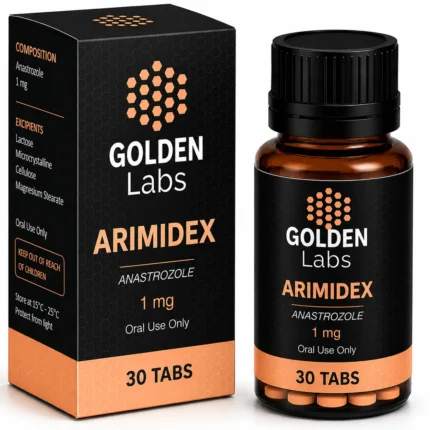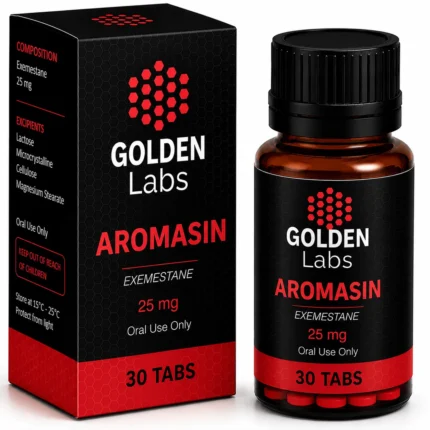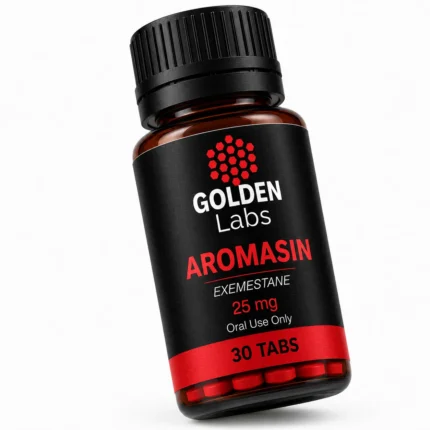

Exemestane
€55.00
Product Overview
Exemestane, also known as Aromasin, is an aromatase inhibitor widely discussed in performance enhancement environments for estrogen management and hormonal support strategies.
Unlike SERMs such as Nolvadex or Clomid, Exemestane does not primarily block estrogen receptors. Instead, it targets the aromatase enzyme responsible for converting androgens into estrogen, making it especially relevant in protocols where estrogen control is a key priority.
Exemestane is commonly positioned as a targeted ancillary compound for users managing aromatizing compounds, estrogen-sensitive response, water retention, mood changes, and broader hormonal stability within structured protocols.
Key Profile
- Best suited for: Estrogen management, aromatase control, ancillary support
- Compound type: Steroidal aromatase inhibitor
- Activity profile: Irreversible aromatase inhibition
- Common name: Aromasin
- Protocol style: Estrogen-control support
- Primary context: Aromatizing compound protocols
Pharmacological Classification
- Class: Aromatase Inhibitor
- Compound: Exemestane
- Type: Steroidal / irreversible aromatase inhibitor
- Administration: Oral
- Primary activity: Estrogen synthesis reduction
- Main role: Ancillary hormonal support
- Common context: Estrogen management in aromatizing protocols
What Makes It Different
Exemestane stands apart from non-steroidal aromatase inhibitors such as Anastrozole and Letrozole because it acts as a steroidal, irreversible aromatase inhibitor. It binds permanently to the aromatase enzyme, which is why it is often referred to as a “suicide inhibitor”.
This mechanism gives Exemestane a distinct identity in ancillary planning. It is not simply another estrogen-control product; it is a specific tool with a specific place depending on estrogen response, compound exposure, and bloodwork context.
Mechanism of Action
Exemestane reduces estrogen production by binding to and inactivating the aromatase enzyme. Aromatase is responsible for converting androgens such as testosterone into estrogen.
By reducing aromatase activity, Exemestane may help control estrogen-related issues such as excessive water retention, estrogen-sensitive tissue response, mood instability, and other symptoms associated with elevated estrogen in certain users.
Performance Applications
- Supports estrogen management in aromatizing protocols
- May help control water retention linked to estrogen response
- Relevant for estrogen-sensitive users
- Complements structured ancillary planning
- Useful when estrogen synthesis reduction is the objective
- Best approached with bloodwork and symptom correlation
Hormonal Support Profile
Exemestane is best understood as an estrogen-control tool, not a direct performance enhancer. It does not build muscle, increase androgen exposure, or directly improve physique composition by itself.
Its value lies in helping manage hormonal balance when estrogen becomes a limiting factor. Used correctly, estrogen control can support better comfort, better protocol tolerance, and more stable overall response. Used poorly, it can create problems quickly.
Potential Side Effects
Potential adverse effects may include low-estrogen symptoms, joint discomfort, reduced libido, mood changes, fatigue, headaches, hot flashes, sleep disruption, or negative changes in lipid profile depending on individual sensitivity.
Excessive estrogen suppression can be just as problematic as elevated estrogen. Estrogen plays important roles in libido, mood, joint comfort, cardiovascular function, and general wellbeing.
Important Considerations
Exemestane should not be used blindly just because a protocol includes testosterone or another aromatizing compound. Estrogen management should ideally be guided by bloodwork, symptoms, body composition, compound selection, and individual aromatization rate.
Crushing estrogen is not the goal. The goal is controlled estrogen management. Too little estrogen can reduce performance, worsen mood, hurt libido, increase joint discomfort, and negatively affect cardiovascular markers.
Stacking Context
Exemestane is generally positioned within protocols involving aromatizing compounds where estrogen control is a specific concern.
It is commonly discussed alongside testosterone-based protocols, mass phases with higher aromatization risk, and advanced stacks where bloodwork-guided ancillary decisions are required.
Storage & Handling
Store in a cool, dry place away from direct sunlight and excessive heat. Keep the product sealed and protected from moisture to preserve tablet integrity.
Protocol Profile
Best suited for structured ancillary strategies where estrogen synthesis control, hormonal stability, and bloodwork-guided decision-making are key priorities. Protocol planning should account for estradiol levels, symptoms, aromatization rate, libido, mood, joint comfort, lipid profile, cardiovascular markers, and individual tolerance.
GoldenLabs Standard
GoldenLabs product pages are designed to provide clear compound information, realistic expectations, and structured guidance context without reducing advanced estrogen-control compounds to oversimplified hormone-management claims.