

Blog
BPC-157 in Bodybuilding: Why Athletes Use It for Recovery and Injury Support

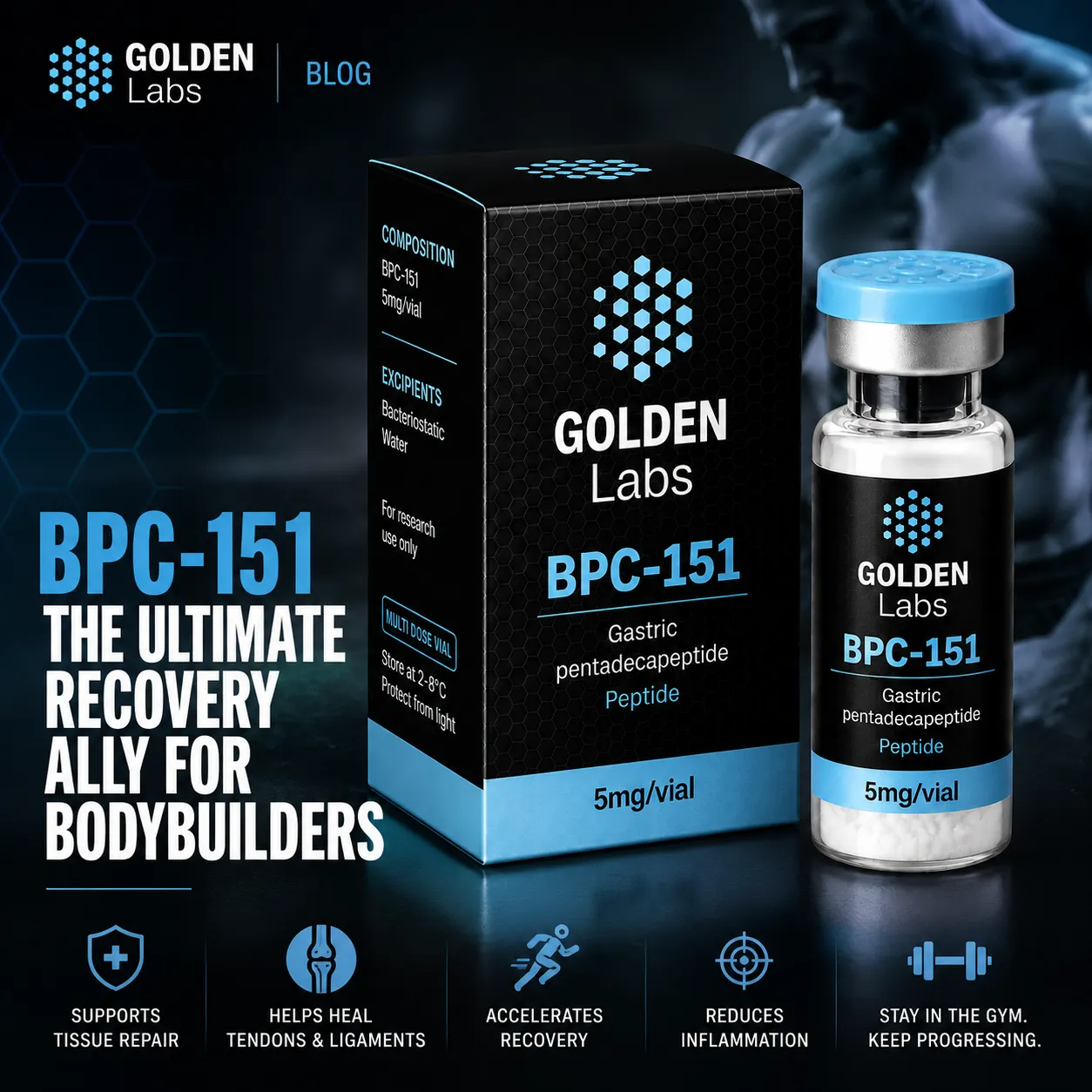
In the world of bodybuilding and performance enhancement, progress is not limited by motivation alone. More often than not, the real bottleneck is recovery.
Muscle tissue may adapt relatively quickly, but tendons, ligaments, connective tissue, and damaged joints recover far more slowly. This is precisely why BPC-157 has become one of the most discussed peptides among serious athletes.
Originally studied for its regenerative and protective properties, BPC-157 has gained a strong reputation in bodybuilding circles for supporting recovery, tissue repair, and overall training longevity.
What Is BPC-157?
BPC-157 (Body Protection Compound-157) is a synthetic peptide derived from a protective protein naturally found in gastric juice. It consists of 15 amino acids and has been investigated primarily for its regenerative effects in animal models.
While not approved as a pharmaceutical drug in most countries, it remains one of the most widely used research peptides in performance communities.
Why Bodybuilders Use BPC-157
BPC-157 is not anabolic in the traditional sense. It does not directly build muscle mass or increase strength. Its value lies elsewhere: helping athletes stay healthy enough to keep progressing.
- Supports tendon and ligament recovery
- May accelerate soft tissue healing
- Often used during rehabilitation from strains or tears
- Can help manage chronic inflammation from repetitive training stress
- Popular for elbow, shoulder, knee, and pec-related injuries
Why Recovery Matters More Than Most Lifters Realize
At advanced levels of bodybuilding, muscular development frequently outpaces connective tissue adaptation.
This creates a mismatch: muscles become stronger faster than tendons and ligaments can structurally adapt, increasing injury risk.
That imbalance is one reason peptides like BPC-157 have become staples among enhanced athletes pushing heavy loads year-round.
Common Use Cases in Bodybuilding
Bodybuilders commonly incorporate BPC-157 during:
- Heavy off-season training blocks
- Post-injury rehabilitation phases
- Management of chronic tendonitis or overuse injuries
- Recovery from pec, biceps, triceps, or hamstring strains
- Joint support during aggressive strength progression phases
Does BPC-157 Improve Performance?
Indirectly, yes.
While BPC-157 is not performance-enhancing in the same way anabolic agents are, better recovery means more productive training sessions, fewer interruptions, and greater long-term consistency.
And in bodybuilding, consistency compounds harder than almost anything else.
BPC-157 Is Not Magic
Despite the hype surrounding the peptide, BPC-157 is not a substitute for intelligent training, proper rehabilitation, or load management.
If your programming is poor, your technique is reckless, or you ignore structural fatigue, no peptide will save you indefinitely.
BPC-157 should be viewed as a recovery support tool, not as permission to train irresponsibly.
Final Thoughts
For bodybuilders and strength athletes, BPC-157 has earned its popularity for one reason: staying healthy is what allows long-term progress.
Building an elite physique is not just about how hard you can train when healthy. It is about how consistently you can keep training over months and years without breakdown.
That is where BPC-157 fits into the conversation.
Disclaimer: This article is for educational and informational purposes only. BPC-157 is a research compound not approved for human medical use in many jurisdictions. Consult a qualified healthcare professional before considering any peptide or performance-enhancing compound.