

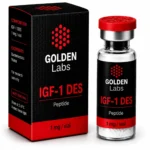
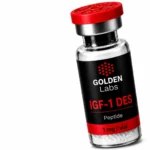
IGF-1 DES
€20.00
Product Overview
IGF-1 DES is a shortened, fast-acting analog of Insulin-Like Growth Factor 1 designed for rapid biological activity and highly targeted growth factor signaling.
Compared to standard IGF-1, the DES variant has a truncated structure that reduces binding to IGF binding proteins, increasing immediate receptor availability and creating a shorter, more localized activity profile.
In advanced physique and performance environments, IGF-1 DES is commonly discussed in the context of localized growth support, recovery signaling, nutrient utilization, and high-level peptide protocol design.
Key Profile
- Best suited for: Localized growth support, recovery signaling, advanced peptide protocols
- Compound type: Short-acting IGF-1 analog
- Activity profile: Fast acting and localized
- Protocol style: Targeted growth factor support
- User level: Advanced users only
Pharmacological Classification
- Class: Insulin-Like Growth Factor Analog
- Compound: IGF-1 DES
- Compound type: Truncated growth factor peptide
- Activity profile: Short acting
- Administration: Subcutaneous / localized use context
- Main role: Growth factor signaling support
What Makes It Different
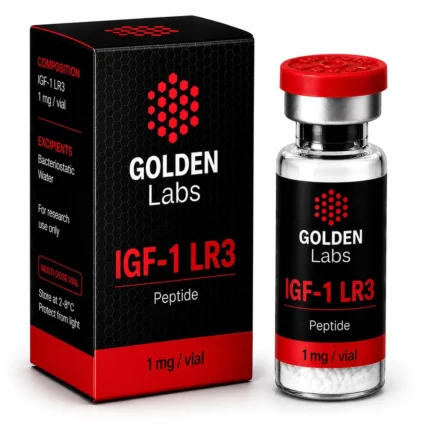
IGF-1 DES stands apart from IGF-1 LR3 because it is shorter acting and more commonly discussed in localized application contexts. While LR3 is valued for extended systemic activity, DES is typically associated with faster and more targeted receptor signaling.
Its reduced binding to IGF binding proteins increases free activity at the receptor level, which is why it is often considered a more specialized and advanced growth factor peptide.
Mechanism of Action
IGF-1 DES binds to IGF-1 receptors and supports anabolic signaling pathways involved in cellular growth, nutrient uptake, repair response, and tissue adaptation.
Because of its shorter activity window, it is generally discussed in contexts where timing, target tissue response, and protocol precision matter more than broad systemic exposure.
Performance Applications
- Supports localized growth factor signaling
- May complement advanced recovery strategies
- Supports nutrient utilization pathways
- Often discussed in targeted physique protocols
- Relevant for experienced peptide users
- Pairs conceptually with structured training stress and recovery planning
Growth & Recovery Profile
IGF-1 DES is best understood as a specialized growth factor peptide rather than a general performance enhancer. Its appeal comes from its targeted and fast-acting profile, making it more technical than many commonly used peptides.
In physique-focused contexts, it is usually positioned for advanced users who already understand training-induced adaptation, recovery signaling, nutrient timing, and the limitations of peptide-based growth support.
Potential Side Effects
Potential adverse effects may include hypoglycemia-related symptoms, headaches, temporary fatigue, water retention, localized irritation, numbness, or sensitivity around administration areas.
Because IGF-related compounds can influence glucose dynamics, appetite, and systemic energy availability, users should pay attention to signs of low blood sugar, dizziness, weakness, or unusual fatigue.
Important Considerations
IGF-1 DES should be treated as an advanced compound. It is not appropriate for users who do not understand glucose management, recovery structure, training stress, and the risks associated with growth factor manipulation.
Growth factor peptides should not be presented as guaranteed site-growth tools. Real-world outcomes depend heavily on training stimulus, nutrition, insulin sensitivity, recovery quality, and individual biological response.
Stacking Context
IGF-1 DES is generally positioned within advanced growth factor and recovery-oriented peptide protocols where precision, timing, and tissue response are key considerations.
It is often discussed alongside structured nutrition, training-phase planning, recovery support, and other growth-pathway compounds depending on user experience and goals.
Storage & Handling
IGF-1 DES is typically supplied as a lyophilized peptide and requires proper reconstitution before use. Store according to product format and protect from heat, light, and contamination. Reconstituted peptide preparations generally require refrigerated storage and careful handling.
Protocol Profile
Best suited for advanced growth factor support strategies where localized signaling, recovery, nutrient utilization, and training adaptation are key priorities. Protocol planning should account for glucose sensitivity, training structure, nutrition quality, recovery status, and individual response.
GoldenLabs Standard
GoldenLabs product pages are designed to provide clear compound information, realistic expectations, and structured guidance context without reducing advanced growth factor peptides to simplistic site-growth claims.