

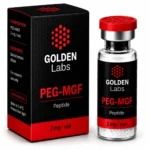
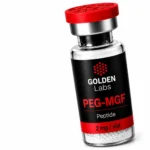

PEG-MGF
€33.00
Product Overview
PEG-MGF is a pegylated form of Mechano Growth Factor, designed to extend biological stability and support recovery-oriented pathways associated with muscular stress, tissue repair, and adaptive response.
Standard MGF is known for its short activity window, which limits systemic exposure. The pegylated structure of PEG-MGF helps prolong its active profile, making it more suitable for structured recovery and growth-support strategies.
In performance-focused environments, PEG-MGF is commonly discussed as part of advanced peptide protocols where recovery quality, tissue support, training adaptation, and overall muscular resilience are key priorities.
Key Profile
- Best suited for: Recovery support, tissue repair, training adaptation
- Compound type: Pegylated growth factor peptide
- Activity profile: Extended stability compared to standard MGF
- Protocol style: Recovery and growth-support focused
- Primary context: Advanced peptide and regeneration strategies
Pharmacological Classification
- Class: Growth Factor Peptide
- Compound: PEG-MGF
- Full name: Pegylated Mechano Growth Factor
- Compound type: Pegylated peptide
- Administration: Subcutaneous
- Main role: Recovery and tissue-support signaling
What Makes It Different
PEG-MGF differs from standard MGF because of its pegylated structure. Pegylation is used to improve stability and extend the active window of peptide-based compounds.
This makes PEG-MGF more suitable for users looking for prolonged systemic recovery support rather than a very short-lived localized activity profile.
Mechanism of Action
PEG-MGF is associated with growth factor signaling pathways involved in cellular repair, muscular stress response, and tissue remodeling. It is commonly discussed in relation to recovery support after intense mechanical loading.
Its activity is generally positioned around supporting adaptation and repair processes rather than directly acting like an androgenic or stimulant-based performance compound.
Performance Applications
- Supports recovery-oriented peptide strategies
- May complement intense resistance training phases
- Supports tissue repair and adaptation pathways
- Relevant for advanced growth-support protocols
- Often discussed in regeneration-focused contexts
- Pairs conceptually with structured training and recovery management
Recovery & Growth Support Profile
PEG-MGF is best understood as a support peptide rather than a direct mass-building compound. Its value lies in its potential role within a broader recovery framework where training stimulus, nutrition, sleep, and systemic recovery are already controlled.
In physique-focused settings, it is generally positioned for users who are already advanced enough to understand recovery bottlenecks, training stress, and the importance of tissue resilience over time.
Potential Side Effects
Potential side effects may include temporary fatigue, headaches, mild water retention, localized irritation, or injection site discomfort depending on individual sensitivity and product handling.
As with all growth factor-related peptides, response can vary. Users should pay attention to recovery perception, inflammation response, local tolerance, and overall systemic feedback.
Important Considerations
PEG-MGF should not be viewed as a substitute for progressive training, adequate protein intake, sleep quality, or injury management. Its best use case is within a structured recovery and performance framework.
Users should also distinguish between recovery support and guaranteed tissue repair. Serious injuries require appropriate medical assessment rather than relying on peptide use alone.
Stacking Context
PEG-MGF is generally positioned within advanced peptide protocols focused on recovery, growth support, tissue resilience, and adaptation to high training stress.
It is commonly discussed alongside broader recovery strategies such as controlled training volume, adequate nutrition, sleep optimization, and other peptide-based support compounds.
Storage & Handling
PEG-MGF is typically supplied as a lyophilized peptide and requires proper reconstitution before use. Store according to product format and protect from heat, light, and contamination. Reconstituted peptide preparations generally require refrigerated storage and careful handling.
Protocol Profile
Best suited for structured recovery and growth-support strategies where tissue resilience, training adaptation, and repair-oriented pathways are key priorities. Protocol planning should account for training load, recovery status, nutrition quality, injury context, sleep, and individual response.
GoldenLabs Standard
GoldenLabs product pages are designed to provide clear compound information, realistic expectations, and structured guidance context without reducing advanced growth factor peptides to exaggerated recovery claims.