


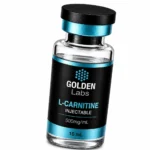

L-Carnitine
€35.00
| Mg | 500 |
|---|---|
| Ml | 10 |
Product Overview
L-Carnitine is a naturally occurring amino acid derivative widely discussed in performance, metabolic support, and body composition environments due to its role in fatty acid transport and cellular energy production.
Its main value comes from supporting the transport of long-chain fatty acids into the mitochondria, where they can be used as an energy substrate. This makes L-Carnitine especially relevant in structured protocols focused on endurance, recovery, metabolic efficiency, and physique composition.
In bodybuilding and performance contexts, L-Carnitine is generally positioned as a support compound rather than a direct anabolic or stimulant agent. Its benefits are best understood within a complete framework that includes training intensity, nutrition structure, cardio output, insulin sensitivity, and recovery quality.
Key Profile
- Best suited for: Metabolic support, endurance, recovery, body composition phases
- Compound type: Amino acid derivative
- Activity profile: Fatty acid transport and cellular energy support
- Protocol style: Performance and metabolic support
- Primary context: Cutting, recomposition, endurance, and recovery-focused strategies
Pharmacological Classification
- Class: Metabolic Support Compound
- Compound: L-Carnitine
- Compound type: Amino acid derivative
- Main role: Fatty acid transport support
- Primary pathway: Mitochondrial energy metabolism
- Common context: Performance, recovery, and body composition support
What Makes It Different
L-Carnitine stands apart from stimulant-based fat-loss compounds because it does not work by forcing nervous system activation or increasing perceived energy through stimulation.
Its profile is more metabolic and supportive. Rather than creating an acute stimulant effect, L-Carnitine is commonly discussed for its role in energy substrate transport, recovery support, endurance capacity, and overall metabolic efficiency.
Mechanism of Action
L-Carnitine supports the transport of long-chain fatty acids into mitochondria, where they can be oxidized and used for energy production.
This mechanism is why it is often associated with fat metabolism, endurance support, and improved energy utilization. However, its impact depends heavily on the broader context, including nutrition, training, insulin sensitivity, and total activity level.
Performance Applications
- Supports fatty acid transport and energy metabolism
- May complement cutting and recomposition phases
- Supports endurance-oriented training output
- May assist recovery and reduced exercise-related fatigue
- Often discussed in cardio and conditioning-focused protocols
- Pairs conceptually with structured nutrition and consistent training
Physique & Metabolic Profile
L-Carnitine is best understood as a metabolic support compound. It does not replace calorie control, resistance training, cardio structure, or recovery management.
In physique-focused settings, its value is usually discussed during phases where the objective is improved energy utilization, better conditioning support, and a more efficient body composition strategy without relying only on stimulants.
Potential Side Effects
Potential side effects may include gastrointestinal discomfort, nausea, cramping, temporary fatigue, body odor changes, or irritation depending on product format and individual sensitivity.
Response can vary between users. Digestive tolerance, hydration status, diet structure, and overall metabolic context may influence how L-Carnitine feels when integrated into a performance or body composition strategy.
Important Considerations
L-Carnitine should not be presented as a standalone fat-loss solution. Its best use case is within a structured plan where training, diet, cardio, sleep, and recovery are already managed properly.
For physique athletes, the objective is not simply “burning fat”, but improving the full metabolic environment while preserving training performance, lean tissue, and recovery capacity.
Stacking Context
L-Carnitine is generally positioned within cutting, recomposition, endurance, recovery, or metabolic support strategies.
It is commonly discussed alongside structured nutrition, resistance training, cardio management, hydration, sleep, insulin sensitivity support, and broader performance planning.
Storage & Handling
Store according to product format and label requirements. Keep protected from excessive heat, moisture, and direct sunlight. For injectable formats, clean handling practices and appropriate storage conditions are essential to preserve product integrity.
Protocol Profile
Best suited for structured metabolic support strategies where energy utilization, endurance, recovery, and body composition are key priorities. Protocol planning should account for nutrition quality, training structure, cardio output, hydration, insulin sensitivity, recovery status, and individual tolerance.
<