
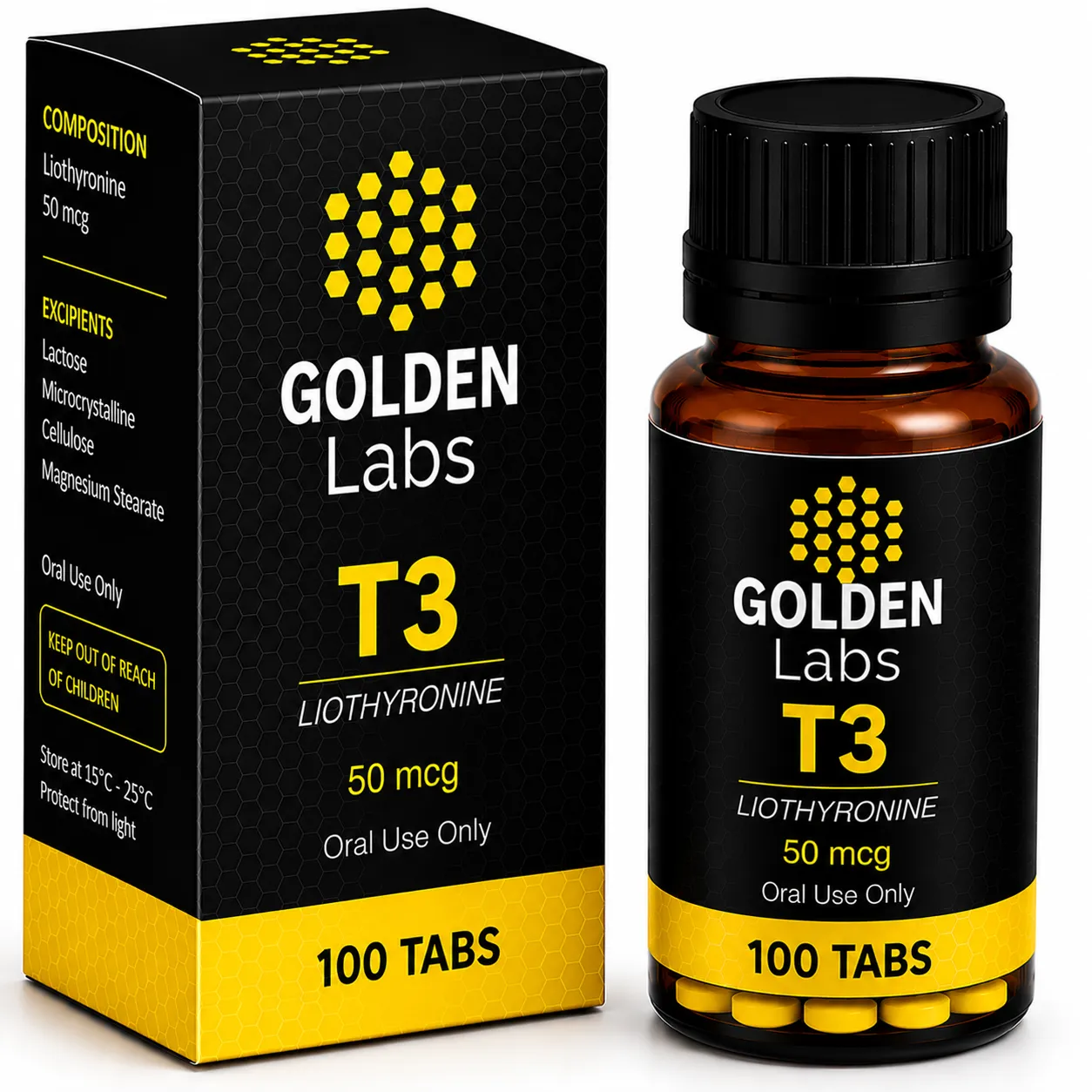





T3
Price range: €10.00 through €19.00
| Mg | 25, 50 |
|---|---|
| Tabs | 100, 50 |
Product Overview
T3, also known as Liothyronine Sodium, is a synthetic thyroid hormone compound widely discussed in cutting, conditioning, and advanced body composition environments for its powerful influence on metabolic rate and energy expenditure.
Unlike stimulant-based compounds such as Clenbuterol, T3 works directly through thyroid hormone pathways rather than adrenergic stimulation alone. Its profile is centered around metabolic acceleration, calorie turnover, nutrient utilization, and increased energy demand across multiple physiological systems.
In bodybuilding and physique-focused contexts, T3 is generally positioned as an advanced cutting-phase compound used to support aggressive fat-loss strategies, contest preparation, and high-level conditioning environments. However, its systemic impact means it should never be treated casually.
Key Profile
- Best suited for: Advanced cutting phases, conditioning, aggressive fat-loss strategies
- Compound type: Synthetic thyroid hormone
- Active compound: Liothyronine Sodium
- Physique profile: Lean, dry, high-metabolic-output
- Activity profile: Strong metabolic acceleration and energy expenditure support
- User level: Advanced and experienced users only
Pharmacological Classification
- Class: Thyroid Hormone
- Compound: Liothyronine Sodium
- Common name: T3
- Administration: Oral
- Primary profile: Metabolic rate and energy expenditure support
- Main role: Advanced fat-loss and conditioning support
- Activity profile: Systemic metabolic stimulation
What Makes It Different
T3 stands apart from stimulant-based cutting compounds because it directly influences thyroid hormone activity and metabolic regulation rather than simply increasing nervous-system stimulation.
Compared to compounds like Clenbuterol or Cardarine, T3 is generally viewed as more systemically aggressive from a metabolic standpoint. It can accelerate fat loss, but it may also increase muscle breakdown, fatigue, and recovery demands if nutrition and protocol structure are poorly managed.
Mechanism of Action
T3 increases metabolic activity through thyroid hormone pathways involved in energy expenditure, oxygen consumption, nutrient turnover, heat production, and overall metabolic rate regulation.
In practical physique contexts, this is why T3 is commonly associated with accelerated calorie expenditure, faster bodyweight reduction, increased body temperature, and more aggressive cutting progression during structured dieting phases.
Performance Applications
- Supports aggressive fat-loss strategies
- May increase metabolic rate and calorie expenditure
- Often discussed in advanced contest-preparation contexts
- Complements structured cutting and conditioning phases
- May enhance physique sharpness during calorie-controlled protocols
- Fits experienced users prioritizing conditioning over mass retention
Physique & Conditioning Profile
T3 is commonly associated with rapid metabolic acceleration and a leaner physique profile during aggressive cutting phases. It is generally used when conditioning and body fat reduction become the primary priorities.
However, faster fat loss does not automatically mean better physique retention. Poor protocol structure, insufficient anabolic support, inadequate nutrition, or excessive exposure may increase the risk of muscle loss, fatigue, and recovery decline.
Metabolic & Recovery Impact
One of the major realities with T3 is that it accelerates the entire metabolic environment, not just fat loss. Recovery demand, nutrient needs, fatigue accumulation, hydration, and muscle preservation all become more important.
This is why experienced users generally approach thyroid compounds with more caution than beginners expect. The physique can get leaner fast, but the body also pays the metabolic bill quickly if the protocol becomes too aggressive.
Potential Side Effects
Potential adverse effects may include elevated heart rate, excessive sweating, anxiety, muscle loss, fatigue, insomnia, appetite changes, palpitations, increased blood pressure, heat intolerance, weakness, and thyroid suppression.
Because T3 directly impacts thyroid function and systemic metabolism, users should carefully monitor cardiovascular status, resting heart rate, sleep quality, recovery capacity, bodyweight changes, hydration, muscle retention, and overall fatigue response.
Important Considerations
T3 should never be treated as a casual fat-loss shortcut. Thyroid hormones influence multiple physiological systems, and poor management can create serious metabolic stress.
Users should consider thyroid health, cardiovascular status, muscle-retention strategy, anabolic support context, calorie intake, sleep quality, recovery capacity, hydration, electrolyte balance, and overall protocol structure before integrating T3 into a conditioning strategy.
Stacking Context
T3 is generally positioned within advanced cutting, contest-preparation, recomposition, and high-level conditioning protocols where aggressive fat loss and metabolic acceleration are key priorities.
It is commonly discussed alongside structured nutrition, cardio planning, hydration management, recovery support, anabolic-support compounds, and bloodwork-guided monitoring depending on individual response and objective.
Storage & Handling
Store in a cool, dry place away from direct sunlight, excessive heat, and moisture. Keep the product sealed and protected to preserve tablet integrity.
Protocol Profile
Best suited for advanced cutting, contest-preparation, and conditioning-focused phases where aggressive fat-loss progression and metabolic acceleration are key priorities. Protocol planning should account for thyroid function, cardiovascular status, muscle-retention strategy, hydration, electrolyte balance, sleep quality, recovery capacity, anabolic support context, and individual tolerance.
GoldenLabs Standard
GoldenLabs product pages are designed to provide clear compound information, realistic expectations, and premium product positioning without reducing thyroid-related compounds to exaggerated fat-loss shortcuts or simplistic metabolism claims.