

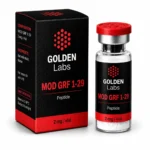
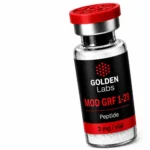
MOD GRF 1-29
€12.00
Product Overview
MOD GRF 1-29 is a modified Growth Hormone Releasing Hormone analog designed to stimulate endogenous growth hormone release through GHRH receptor activation. It is commonly discussed in peptide-focused environments for its ability to support physiological GH pulse signaling.
Unlike growth hormone secretagogues such as GHRP-2, GHRP-6, Hexarelin, or Ipamorelin, MOD GRF 1-29 works through the GHRH pathway rather than the ghrelin receptor pathway. This makes it especially relevant in protocols where users want to support natural growth hormone pulse architecture in a more structured and complementary way.
In advanced physique, recovery, and wellness contexts, MOD GRF 1-29 is often positioned as a foundation peptide used alongside compatible secretagogues to enhance endogenous GH pulse quality without directly replacing growth hormone itself.
Key Profile
- Best suited for: GH pulse support, recovery strategies, GHRH-based peptide protocols
- Compound type: Modified Growth Hormone Releasing Hormone analog
- Activity profile: Short-acting endogenous GH support
- Protocol style: GHRH pathway support and pulse amplification
- User level: Intermediate to experienced peptide users
Pharmacological Classification
- Class: Growth Hormone Releasing Hormone Analog
- Compound: MOD GRF 1-29
- Also known as: Modified GRF 1-29
- Compound type: Synthetic peptide
- Target: GHRH receptor pathways
- Administration: Subcutaneous
- Main role: Endogenous growth hormone release support
What Makes It Different
MOD GRF 1-29 stands apart from GHRP-style peptides because it does not primarily activate ghrelin receptors. Instead, it works through the GHRH receptor pathway, which is directly involved in natural pituitary growth hormone signaling.
This difference is important because MOD GRF 1-29 is often discussed as a complementary peptide rather than a direct replacement for secretagogues. The goal is usually to support a more complete GH pulse environment.
Mechanism of Action
MOD GRF 1-29 binds to GHRH receptors in the anterior pituitary, encouraging endogenous growth hormone release in a pulsatile manner.
Because its activity window is relatively short, it is commonly discussed in contexts where pulse timing, recovery goals, and pairing with secretagogues are central to protocol design.
Performance Applications
- Supports endogenous growth hormone pulse signaling
- Complements recovery-focused peptide strategies
- Pairs conceptually with GHRP-style secretagogues
- May support sleep, recovery, and adaptation pathways
- Often discussed in wellness and longevity-oriented protocols
- Relevant for users prioritizing physiological GH support
Recovery & GH Support Profile
MOD GRF 1-29 is best understood as a GHRH-pathway support peptide. Its value lies in encouraging the body’s own growth hormone release rather than providing exogenous growth hormone directly.
In performance-focused environments, it is typically used by people who already understand the importance of sleep, nutrition, training structure, and recovery quality. Without those fundamentals, the peptide’s potential is poorly leveraged.
Potential Side Effects
Potential side effects may include temporary flushing, mild water retention, headaches, fatigue, dizziness, increased hunger in some users, or injection site irritation depending on individual sensitivity.
Because MOD GRF 1-29 influences endogenous GH signaling, users should pay attention to recovery perception, water retention, sleep quality, appetite response, and overall tolerance.
Important Considerations
MOD GRF 1-29 should not be viewed as a standalone shortcut for muscle gain, fat loss, or recovery. Its best use case is within a structured peptide strategy where lifestyle, training, sleep, and nutrition are already controlled.
Protocol planning should also consider total peptide exposure, individual response, receptor sensitivity, recovery status, and whether other GH-support compounds are being used at the same time.
Stacking Context
MOD GRF 1-29 is generally positioned within GH-support protocols where GHRH signaling and GH pulse quality are key priorities.
It is commonly discussed alongside GHRP-style secretagogues, recovery-focused peptides, sleep optimization, resistance training, and structured nutrition depending on the user’s goals and experience level.
Storage & Handling
MOD GRF 1-29 is typically supplied as a lyophilized peptide and requires proper reconstitution before use. Store according to product format and protect from heat, light, and contamination. Reconstituted peptide preparations generally require refrigerated storage and careful handling.
Protocol Profile
Best suited for structured GH-support strategies where endogenous pulse signaling, recovery, sleep quality, and adaptation are key priorities. Protocol planning should account for recovery status, sleep structure, training load, appetite response, total peptide exposure, and individual tolerance.
GoldenLabs Standard
GoldenLabs product pages are designed to provide clear compound information, realistic expectations, and structured guidance context without reducing GHRH analogs to exaggerated growth hormone claims.