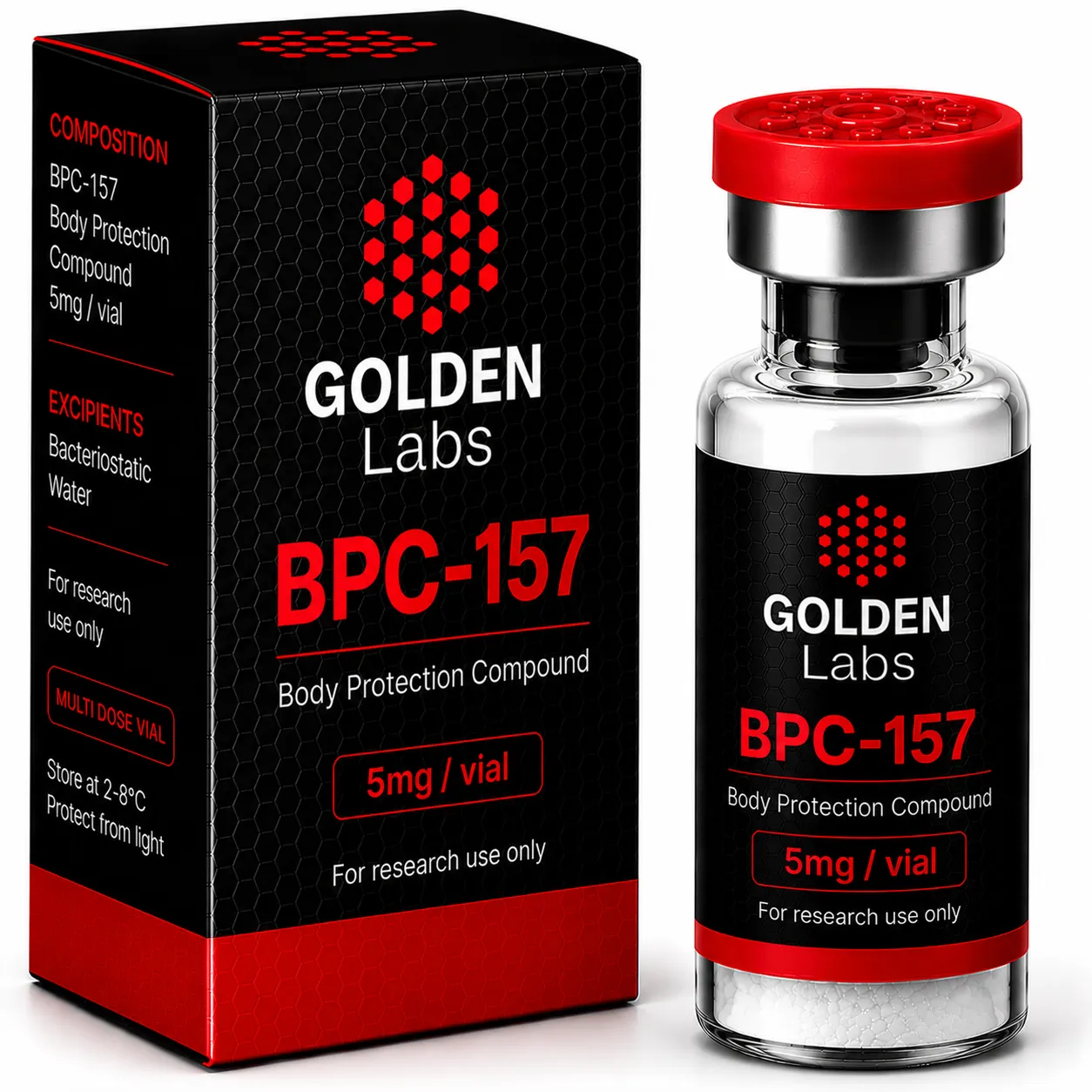
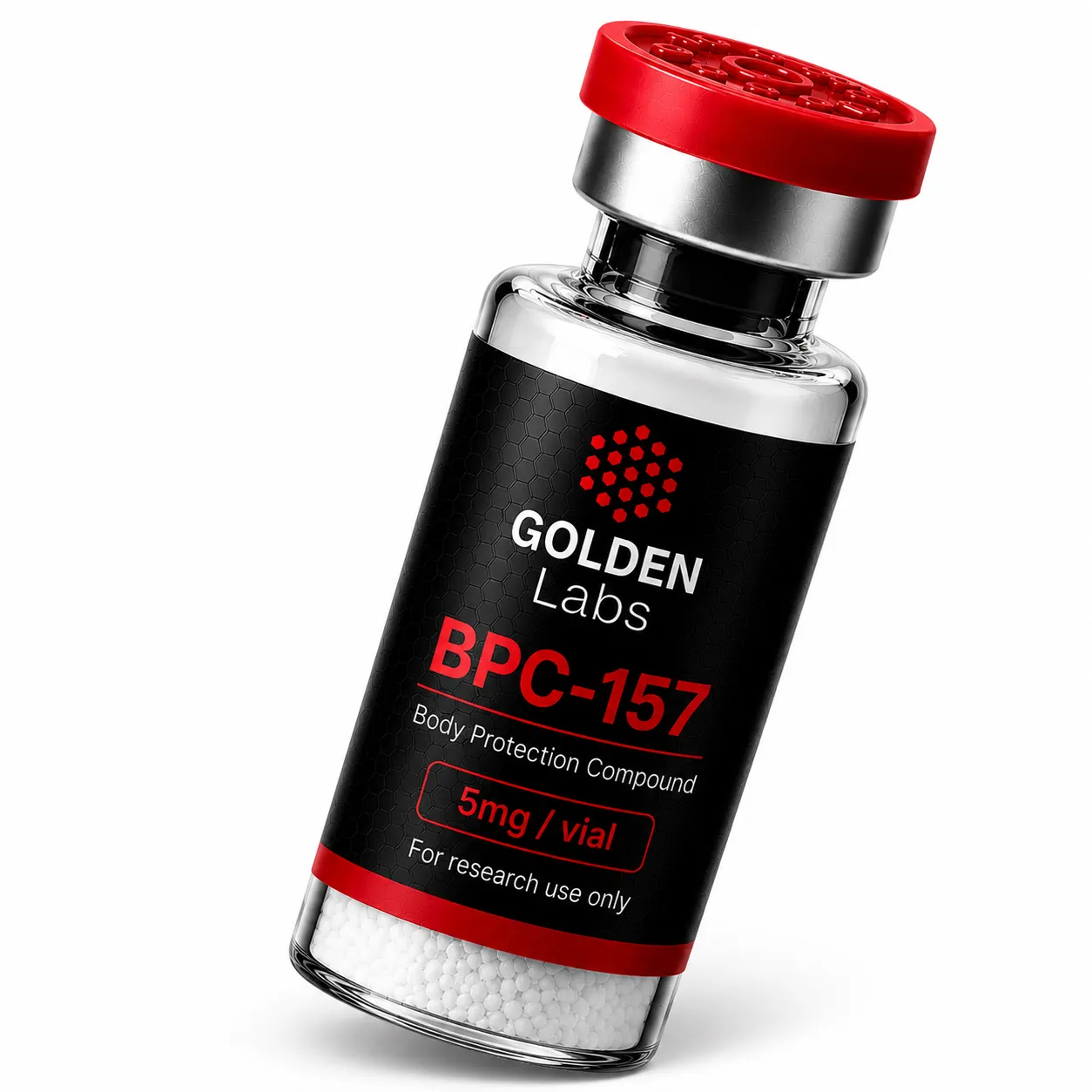
BPC-157
€18.00
Product Overview
BPC-157 is a synthetic peptide commonly discussed in recovery, tissue-support, and gastrointestinal wellness environments. It is widely recognized in performance circles for its association with soft tissue recovery, tendon and ligament support, and repair-oriented biological pathways.
Unlike anabolic compounds that primarily target muscle growth through androgen receptor activity, BPC-157 is generally positioned around recovery support, connective tissue resilience, inflammation-management context, and localized repair strategies.
In bodybuilding, strength training, and performance environments, BPC-157 is often considered by users dealing with accumulated joint stress, tendon irritation, nagging injuries, digestive discomfort, or recovery limitations that affect training consistency.
Key Profile
- Best suited for: Recovery support, tendon support, ligament support, gastrointestinal support
- Compound type: Synthetic recovery peptide
- Activity profile: Tissue-support and repair-oriented
- Protocol style: Localized recovery and connective tissue support
- Primary context: Performance recovery, injury-management, and gut-support strategies
- User level: Beginner to experienced peptide users depending on context
Pharmacological Classification
- Class: Recovery Peptide
- Compound: BPC-157
- Compound type: Synthetic peptide
- Related context: Body Protection Compound research
- Administration: Subcutaneous / localized use context
- Main role: Tissue-support and recovery pathway support
- Common context: Tendon, ligament, joint, soft tissue, and digestive support strategies
What Makes It Different
BPC-157 stands apart from classic performance compounds because it is not primarily used for direct strength, fullness, libido, or muscle gain. Its positioning is more recovery-focused and tissue-support oriented.
Compared to TB-500, BPC-157 is often discussed in more localized recovery contexts, especially around tendons, ligaments, joints, and gastrointestinal support. TB-500 is usually positioned as more systemic, while BPC-157 is commonly viewed as more targeted.
Mechanism of Action
BPC-157 is commonly discussed for its potential role in angiogenesis-related pathways, tissue remodeling, tendon and ligament support, inflammatory response modulation, and gastrointestinal protection mechanisms.
These mechanisms are why it is often associated with soft tissue recovery, connective tissue resilience, and gut-support strategies. However, real-world outcomes depend heavily on injury severity, training decisions, nutrition, sleep, inflammation control, and rehabilitation quality.
Performance Applications
- Supports recovery-oriented strategies
- May complement tendon and ligament support protocols
- Often discussed in joint and soft tissue discomfort contexts
- Relevant for users managing accumulated training stress
- May support digestive wellness strategies
- Pairs conceptually with deloads, rehab work, sleep, nutrition, and load management
Recovery & Tissue Support Profile
BPC-157 is best understood as a recovery-support peptide rather than a direct physique enhancer. It does not replace intelligent programming, progressive rehabilitation, medical assessment, or load management.
In bodybuilding and strength environments, its value is usually discussed when tendons, ligaments, joints, digestion, or soft tissue recovery become limiting factors. When pain or irritation starts limiting progression, recovery support becomes a serious subject, pas juste un bonus.
Gastrointestinal Support Profile
BPC-157 is also commonly discussed in gut-support contexts. Some users associate it with digestive comfort, gastrointestinal resilience, and support during periods of digestive stress.
For physique athletes, this can matter more than people think. If digestion is poor, food intake, nutrient absorption, recovery, appetite, and performance can all suffer. A good physique starts with food that actually passes correctement.
Potential Side Effects
Potential side effects may include temporary fatigue, nausea, headaches, dizziness, appetite changes, injection site irritation, or changes in recovery perception depending on individual sensitivity.
Because BPC-157 is often discussed in injury-support contexts, users should be careful not to overload an area too quickly just because pain perception improves. Less pain does not automatically mean full tissue readiness.
Important Considerations
BPC-157 should not be presented as a guaranteed injury cure. Tendon, ligament, joint, and gut issues are complex and depend on tissue type, injury severity, training load, inflammation, digestion, nutrition, sleep, and time.
The smartest use case is within a complete recovery framework: reduced aggravating load, progressive rehabilitation, adequate protein intake, sleep optimization, hydration, mobility work, and realistic return-to-training progression.
Stacking Context
BPC-157 is generally positioned within recovery, soft tissue support, gut support, and connective tissue-focused strategies rather than anabolic, hormonal, or fat-loss protocols.
It is commonly discussed alongside TB-500, structured rehabilitation, deload phases, mobility work, digestive support strategies, sleep optimization, nutrition support, and broader injury-management planning depending on the user’s objective and recovery status.
Storage & Handling
BPC-157 is typically supplied as a lyophilized peptide and requires proper reconstitution before use. Store according to product format and protect from heat, light, and contamination.
Reconstituted peptide preparations generally require refrigerated storage and careful handling. Clean reconstitution practices, appropriate storage conditions, and protection from contamination are essential to preserve product integrity.
Usage Profile
Best suited for structured recovery-support strategies where tendon support, ligament resilience, soft tissue recovery, gut support, and return-to-training management are key priorities. Planning should account for injury severity, training load, rehabilitation work, inflammation, digestion, sleep quality, nutrition, hydration, and individual response.
GoldenLabs Standard
GoldenLabs product pages are designed to provide clear compound information, realistic expectations, and premium product positioning without reducing recovery peptides to exaggerated injury-repair or gut-health claims.